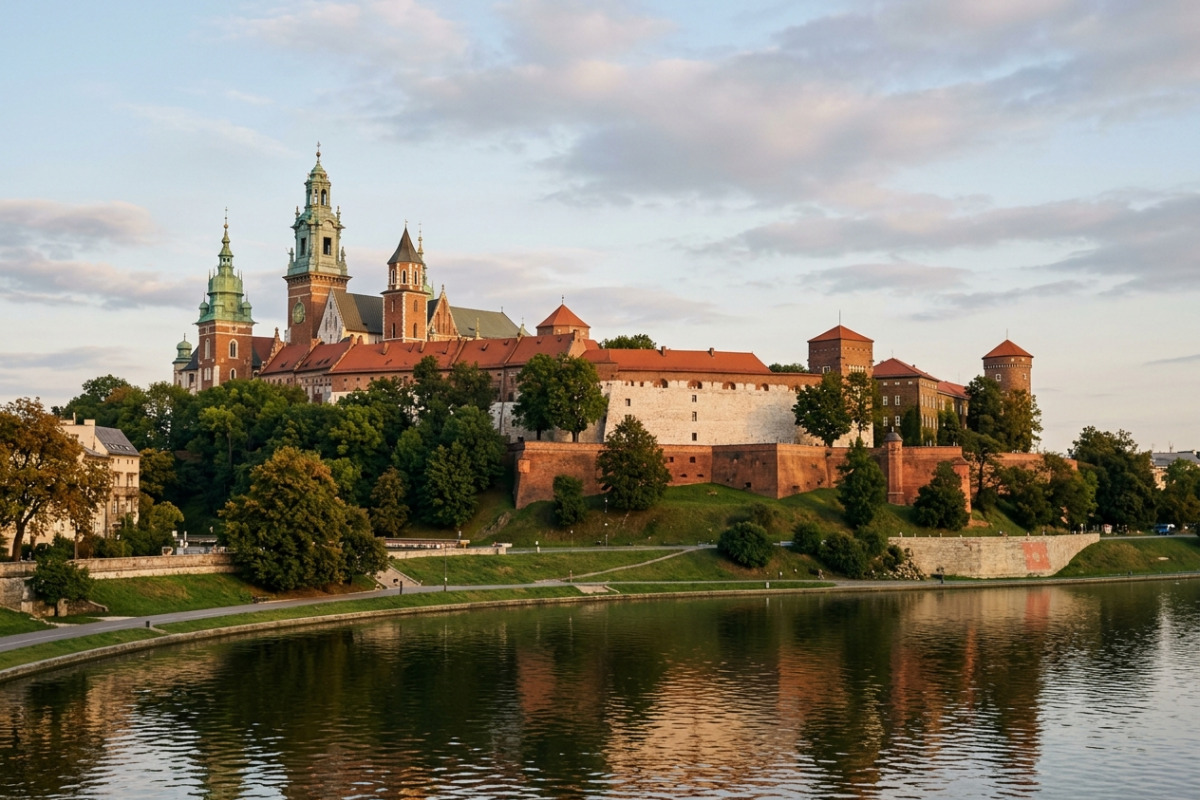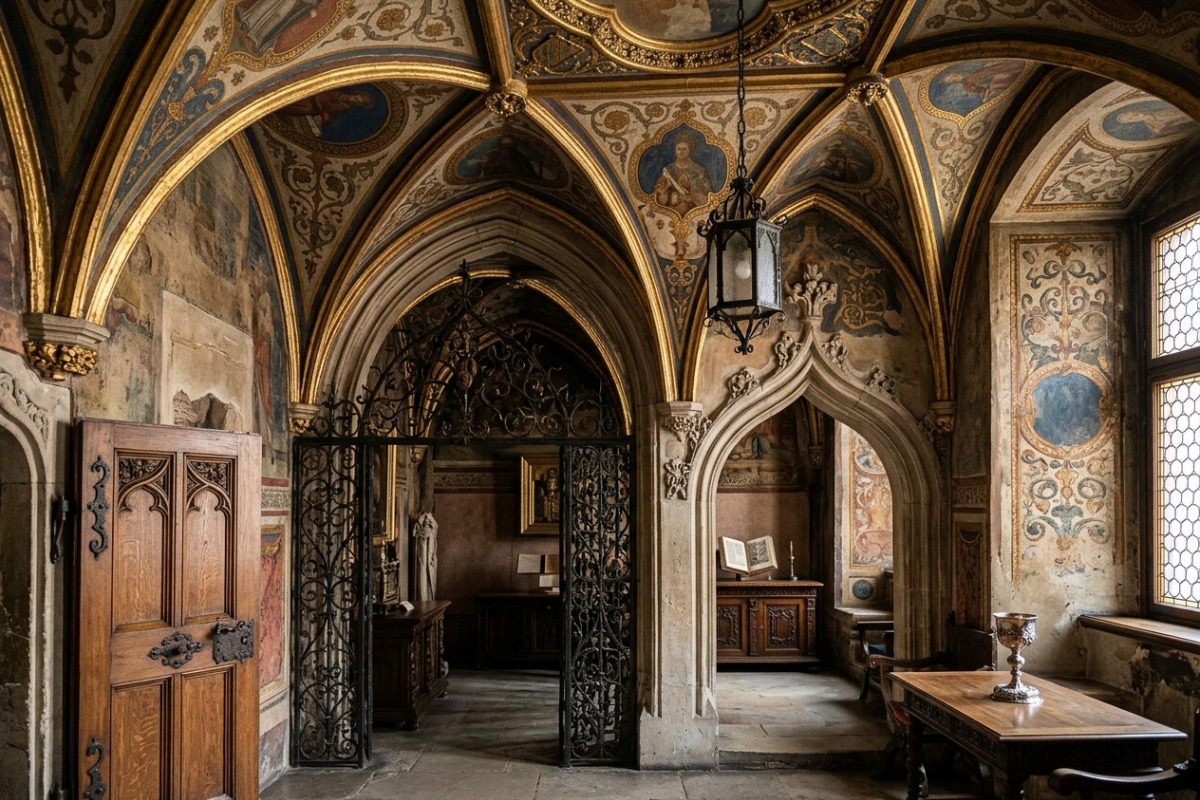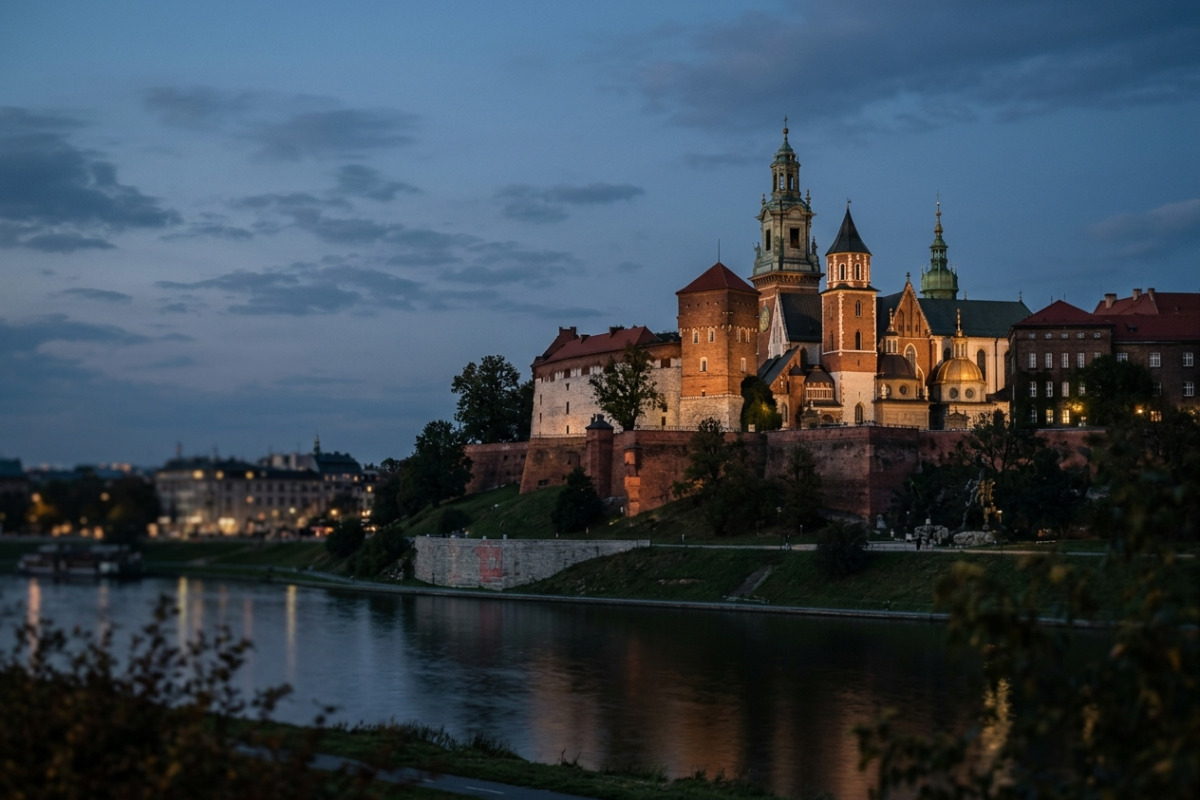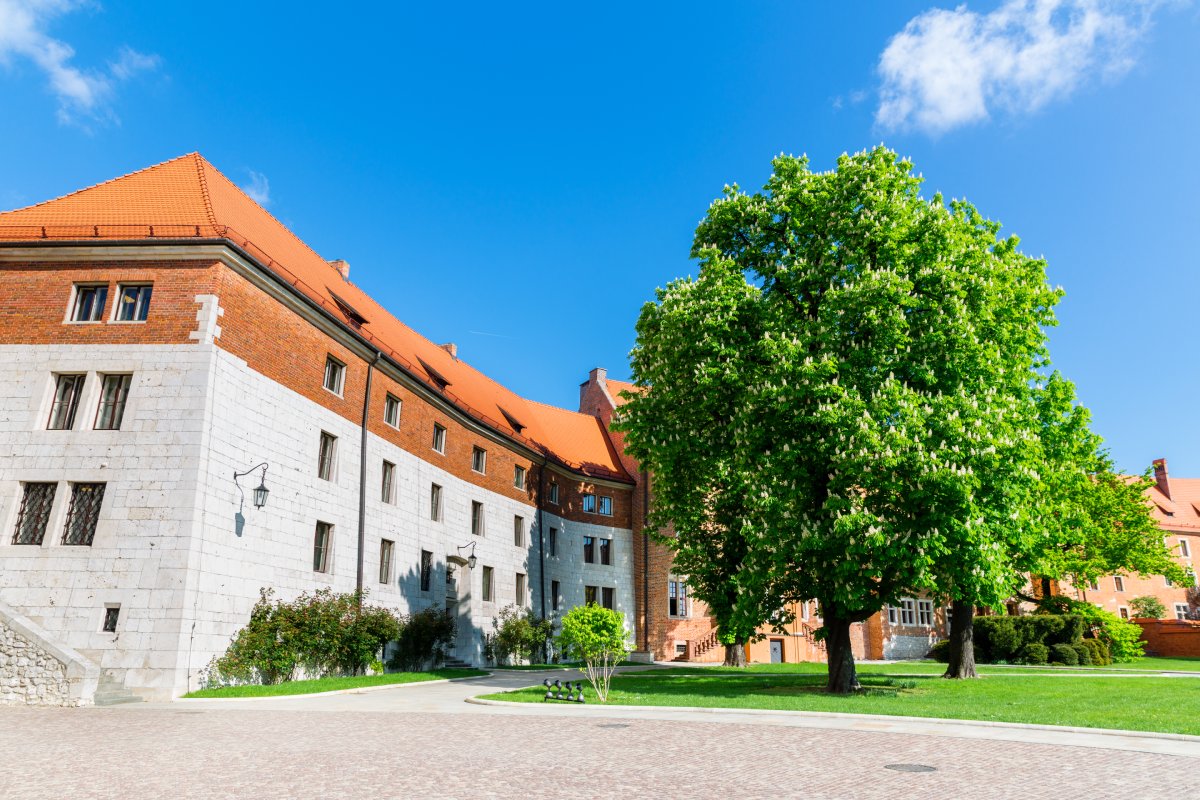
Stepping through the heavy gates of Wawel Royal Castle, visitors are often prepared for the Gothic austerity typical of Northern European strongholds. However, the moment you enter the central courtyard, that expectation vanishes, replaced by a breathtaking vision of symmetry, light, and open space. It feels less like a medieval fortress and more like a sun-drenched palazzo in Florence or Rome. This is the Arcaded Courtyard, a masterpiece in stone that defines the golden age of Polish culture and stands as one of the finest examples of Renaissance architecture north of the Alps. Imagine the scene: the intricate stonework, bathed in sunlight, a testament to the artistic vision of the era. This remarkable example of Wawel architecture represents a bold transformation, shifting the castle's identity from a defensive military structure to a prestigious royal residence that embraced the humanist ideals of the 16th century.
The atmosphere here is distinctively different from the rest of Krakow. The geometric perfection of the tiered arcades creates a rhythm that draws the eye upward and around, instilling a sense of calm and order. For travelers visiting in January 2026, the stone may be cold to the touch, yet the visual warmth of the design remains undeniable. This architectural marvel was not merely a stylistic choice; it was a deliberate cultural statement by the Jagiellonian dynasty to align Poland with the artistic and intellectual currents of the Mediterranean. To witness this harmony firsthand, many visitors choose to Book Now to ensure they have ample time to explore the nuances of this stone canvas. Consider capturing the moment with a photograph; the courtyard's beauty is truly captivating.
The Dawn of the Polish Renaissance
The story of this courtyard begins with disaster and ambition. Following a devastating fire in 1499 that consumed much of the old Gothic residence, King Sigismund I the Old saw an opportunity rather than a tragedy. Having spent time in Buda at the court of his brother, where the Italian Renaissance had already taken root, Sigismund was captivated by the new style. He envisioned a residence that reflected the power, wealth, and modern outlook of the Polish-Lithuanian Commonwealth. The reconstruction was not just about repairing walls; it was about rewriting the architectural language of the kingdom. The King's vision was to create a lasting symbol of Polish power and culture, a true Renaissance courtyard.
To achieve this, the King turned to the source of the Renaissance: Italy. He invited masters who understood the principles of proportion and classical beauty to breathe new life into Wawel. This decision marked a pivotal moment in Polish history, importing the "light and order" of the south to the heart of Central Europe. As you walk through the various Sections of the castle today, the courtyard serves as the unifying element, a central lung that allows the massive complex to breathe.
A Symphony of Arches: The Architectural Layout
The courtyard is defined by its three distinct levels of arcades (loggias) that run along three sides of the pentagonal enclosure. This tiered structure is a study in harmony, yet it avoids monotony through subtle variations in height and column style. The layout was designed to serve both functional and aesthetic purposes, creating covered walkways that allowed the court to move between chambers protected from the rain and snow, while simultaneously opening the interiors to natural light. This ingenious design is a key element of Wawel's Arcaded Courtyard.
The Lower Tiers
The ground and first floors follow a similar rhythm, featuring semi-circular arches supported by slender stone columns. These levels were primarily used for the chancellery, court officials, and service areas. The repetition of the arches creates a mesmerizing optical effect, guiding the viewer's gaze along the perimeter. The stonework here is precise, with capitals that hint at classical orders but are adapted to the local materials and craftsmanship.
The Grand Second Floor
The crowning glory of the courtyard is undoubtedly the second floor. Unlike the lower two levels, the columns here are exceptionally tall, supporting the high roof structure. This is the piano nobile, the level containing the Royal Private Apartments and the State Rooms. The architects faced a structural challenge here: how to support the steep, heavy roof required for the snowy Polish climate while maintaining the lightness of the Italian style. Their solution was the famous "jug" or "vase" shaped columns combined with a higher architrave. This unique feature gives the Wawel courtyard its signature silhouette, distinguishing it from its Italian cousins. (Imagine a close-up photo of the jug-shaped columns)
The Italian Masters Behind the Stone
Two brilliant minds were primarily responsible for this architectural triumph: Francesco Fiorentino and Bartolomeo Berrecci. Their collaboration and succession ensured that the vision remained consistent even as the project spanned decades. They did not simply copy Italian blueprints; they adapted the Tuscan style to fit the specific constraints of the existing medieval walls and the harsh local climate. This adaptation is what makes the architecture of Wawel so unique.
| Architect | Role & Contribution | Key Characteristics |
| Francesco Fiorentino | The Pioneer (1502–1516) | Initiated the Renaissance reconstruction. He introduced the stone bay window and the initial concept of the tiered arcades, focusing on the west wing. |
| Bartolomeo Berrecci | The Master Builder (1516–1537) | Completed the arcades and unified the design. He is credited with the elegant proportions and the decorative details that give the courtyard its refined character. |
Berrecci, in particular, was instrumental in finalizing the geometric perfection we see today. Under his guidance, the courtyard became a complete entity, a "forum" for the royal court. His ability to blend the monumental with the decorative is what makes the space feel so majestic. Visitors interested in the specific works of these architects inside the chambers should check the Visiting Information page to plan their route effectively.
Geometric Perfection and Optical Illusions
What makes the Arcaded Courtyard so pleasing to the eye is its reliance on mathematical ratios. The Renaissance architects believed that beauty stemmed from objective proportions—relationships between width, height, and depth that mirrored the harmony of the universe. At Wawel, this is evident in how the columns align and how the height of the floors increases as you look up, drawing the eye toward the sky. The geometric design is a key element of its appeal.
There is also a fascinating play of light and shadow that changes throughout the day. In the morning, the eastern arcades are bathed in a soft glow, highlighting the intricate details of the capitals. By late afternoon, deep shadows cast by the columns create a dramatic, high-contrast pattern on the stone floors. This interaction with natural light was a revolutionary concept in a region previously dominated by thick-walled, dark Gothic structures. It brought the Mediterranean concept of "al fresco" living to a place where winter lasts for months.
Experiencing the Courtyard Today
For the modern traveler, the Arcaded Courtyard is the perfect starting point for any tour of Wawel Hill. It serves as the distribution point for the various exhibitions, but it is a destination in its own right. Standing in the center, you can pivot 360 degrees and see the seamless integration of the different wings. It is a photographer's dream, offering endless compositions of arches, columns, and sky.
To get the most out of your visit, consider these tips:
- Look Up: Don't just look at the arches; examine the remnants of the polychrome friezes under the eaves. Originally, the castle was much more colorful than the bare stone we see today.
- Check the Acoustics: The courtyard has excellent acoustics, which is why it is often used for open-air concerts during the summer evenings.
- Timing Matters: The courtyard can get crowded. For a serene experience where you can truly appreciate the geometry without obstruction, try to arrive early. You might want to get Skip-The-Line Tickets to maximize your time on site.
- Details in Stone: Look closely at the capitals of the columns; no two are exactly alike, showcasing the creativity of the individual stone carvers.
Before heading up the hill, it is always wise to review the FAQ section for rules regarding photography and bag restrictions within the courtyard area.
A Legacy of Order and Beauty
The Wawel Arcaded Courtyard is more than just a beautiful architectural feature; it is a symbol of a nation that was open to the world, eager to learn, and capable of creating world-class art. It stands as a testament to the vision of King Sigismund I and the genius of Fiorentino and Berrecci. They took a medieval fortress and, through the clever use of geometry and stone, turned it into a palace of light. The Wawel courtyard is a true masterpiece.
Visiting this masterpiece offers a tangible connection to the 16th century. It reminds us that architecture is not just about shelter, but about shaping how we feel and how we perceive the world around us. Whether you are an architecture enthusiast or simply a traveler soaking in the atmosphere of Krakow, the rhythm of these arches will leave a lasting impression. The Arcaded Courtyard is an unforgettable experience.