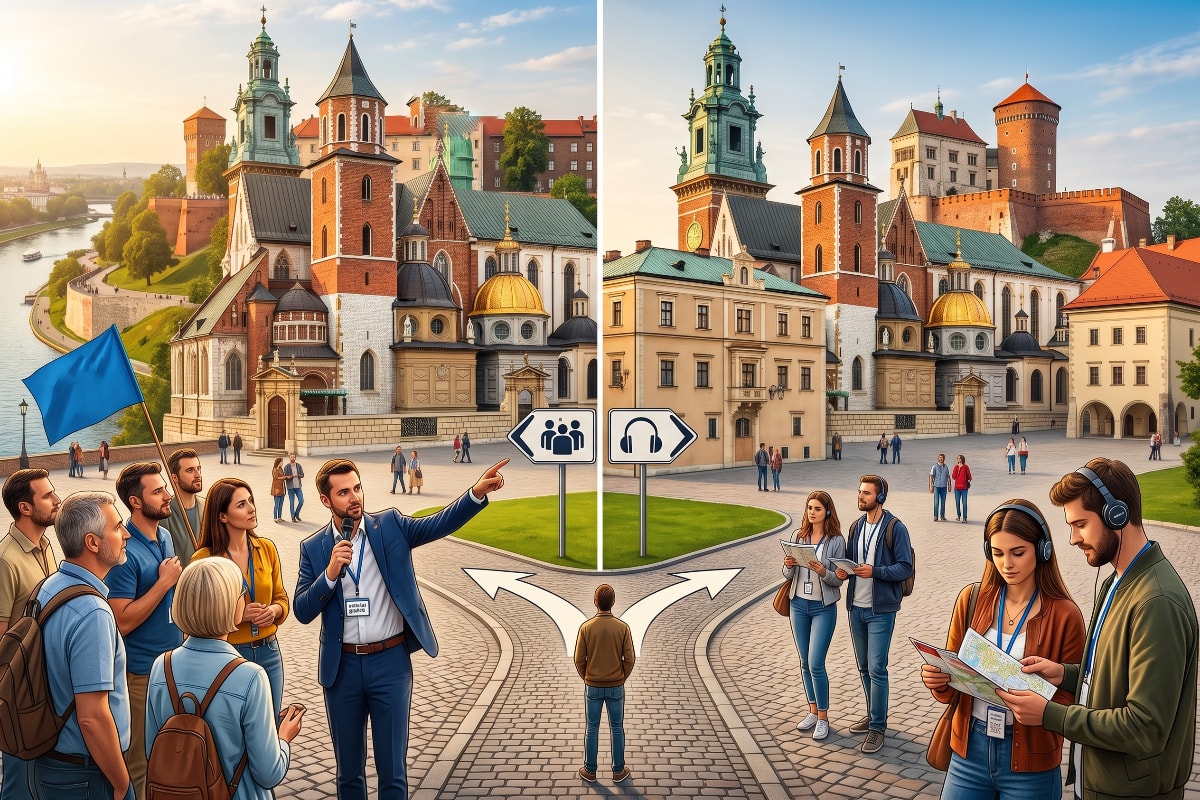
Standing at the foot of Wawel Hill, looking up at the imposing silhouette of the Royal Castle against the Krakow sky, you realize you are about to enter the beating heart of Polish history. Every stone, tapestry, and chamber within these walls holds centuries of secrets, from the coronations of kings to the legends of dragons. However, the quality of your visit often hinges on one crucial decision made before you even step through the gates: how will you uncover these stories? Travelers are often torn between the immersive storytelling of a live human guide and the flexible independence of an audio guide. Both options offer distinct advantages, and the right choice depends entirely on your personal travel rhythm, your interest in history, and how you prefer to absorb information.
To ensure you make the most of your time exploring the various sections of this magnificent complex, it is essential to understand exactly what each experience entails. This isn't just about cost; it is about the texture of your memories. Do you want a dialogue with a local expert who can answer your burning questions, or do you prefer the solitude of a curated narrative in your headphones while you linger over a specific painting? In this guide, we break down the pros and cons of both methods to help you tailor your Wawel Castle adventure.
The Human Connection: The Live Guided Tour Experience
There is an undeniable magic to exploring a historical site with a passionate local expert. Opting for a live guided tour transforms a sightseeing trip into an educational journey. When you book a live guide, you aren't just paying for navigation through the complex corridors of the State Rooms or the Royal Private Apartments; you are paying for context, emotion, and adaptability. A good guide reads the room—or the group—and adjusts their storytelling to match the energy of the visitors, highlighting details that might otherwise go unnoticed by the untrained eye.
Interactive Storytelling and Hidden Gems
The primary advantage of a live tour is interactivity. History is not static, and often, the most fascinating anecdotes are not found on display plaques. Guides often share local legends, architectural quirks, and recent discoveries that haven't made it into the guidebooks yet. If you are curious about a specific painting or the lineage of a particular monarch, you can simply ask. This two-way communication creates a dynamic learning environment that is particularly engaging for history buffs who crave depth beyond the surface-level facts. Many visitors rave about the personal touch a guide provides. As one traveler noted, "Our guide pointed out details we would have completely missed, like the hidden symbols in the tapestries. It really brought the castle to life!"
Structure and Efficiency
For travelers on a tight schedule, a live guide ensures you see the highlights without getting lost or wasting time figuring out the route. The tour follows a logical flow, ensuring you cover the most significant masterpieces and architectural wonders efficiently. This is particularly helpful during peak tourist seasons when crowds can be overwhelming. A guide knows exactly where to stand for the best views and how to navigate the flow of visitors, allowing for a smoother experience compared to wandering alone.
The Freedom of Exploration: The Audio Guide Experience
On the other end of the spectrum lies the audio guide, a favorite among independent travelers, photographers, and introverts. Renting an audio guide provides a high-quality, pre-recorded narrative that you can control. This option offers a sense of autonomy that a group tour simply cannot match. You are the captain of your own ship, deciding which rooms deserve twenty minutes of your attention and which ones you might want to breeze through. For those who find group dynamics distracting or who simply want to soak in the atmosphere in silence, the audio guide is a perfect companion.
Unmatched Flexibility and Pace
The greatest benefit of the audio guide is the ability to hit "pause." If you want to sit in the courtyard and admire the Renaissance arcades for fifteen minutes, or if you need to take a break for a coffee, you can do so without worrying about holding up a group. This is an excellent option for families with young children who may need frequent breaks, or for photographers waiting for the perfect light to capture the castle's details. You are not bound by a strict timetable once you have entered the exhibition, giving you the liberty to breathe in the history at your own rhythm.
Language Accessibility
While live guides are typically available in major languages like English, Polish, German, and sometimes Spanish or French, audio guides generally offer a much broader spectrum of language options. This ensures that visitors from all over the world can access the history of the Polish kings in their native tongue. Before visiting the castle, it is worth checking if your specific language is supported, but generally, audio devices cover a wide array of global languages, making the history accessible to a more diverse audience.
Beyond language accessibility, modern audio guides often offer technological advantages that enhance the experience. Many now include interactive maps, high-resolution images, and even augmented reality features that allow you to visualize historical scenes overlaid onto your current view. Some even utilize GPS to automatically trigger audio commentary as you move through the castle, ensuring you never miss a detail. One recent visitor commented, "The audio guide was fantastic! The augmented reality feature really helped me understand what the castle looked like centuries ago."
Comparative Analysis: Breaking Down the Differences
To help you visualize the differences, we must look at the practical aspects of your visit. The choice often comes down to a trade-off between depth of engagement and personal freedom. Below is a detailed breakdown of how these two options stack up against each other in critical categories.
| Feature | Live Guided Tour | Audio Guide |
| Cost | Generally higher price point due to the personalized service and expertise of a professional. | More budget-friendly, usually a small add-on fee to the standard entrance ticket. |
| Flexibility | Low. You must follow the guide's pace and the group's schedule. | High. Pause, rewind, skip, or linger as you please. |
| Interaction | High. You can ask questions and engage in discussions. | None. The content is pre-recorded and one-way. |
| Content Depth | Adaptive. Guides can go deep into specific topics based on interest. | Standardized. Provides a thorough overview but cannot elaborate further. |
| Social Aspect | Social. You are part of a group and share the experience. | Solitary. Ideal for introspection and personal focus. |
Which Option Suits Your Travel Style?
Ultimately, there is no "wrong" way to visit Wawel Castle, but aligning your choice with your personality will enhance your satisfaction. If you are the type of traveler who reads history books before a trip and loves to ask "why?" and "how?", then investing in a live tour is undoubtedly worth it. The human connection brings the cold stone walls to life in a way a recording cannot. It is also the recommended option for first-time visitors who want a comprehensive introduction without the stress of navigating a large complex.
Conversely, if you prefer a leisurely stroll, want to focus on photography, or are visiting on a budget, the audio guide is a fantastic tool. It provides sufficient historical context to appreciate the grandeur of the residence without dictating your schedule. It allows for a more meditative experience, where you can stand before the famous tapestries and let the narration wash over you without the distraction of other tourists chattering nearby. For specific queries regarding accessibility or device rentals, checking the FAQ page is always a good idea before arrival.
Booking Your Experience
Regardless of which option you choose, the most important piece of advice for visiting Wawel Castle is to plan ahead. This is one of Poland's most popular attractions, and tickets can sell out weeks in advance, especially during the summer months or holiday weekends. Waiting until you arrive at the ticket office often leads to disappointment or long queues.
- For Live Tours: These often require booking specific time slots. It is highly recommended to look for "Skip-the-Line" options that include a guide to maximize your time.
- For Audio Guides: These can usually be added to your standard entry ticket. Make sure to bring your own headphones if you prefer them over the provided devices for hygiene and comfort.
To secure your preferred date and time, it is best to buy tickets online well before your trip. Whether you choose the vibrant storytelling of a local expert or the curated independence of an audio guide, Wawel Castle promises an unforgettable journey into the past. Choose the mode that lets you connect best with history, and prepare to be amazed by the royal heritage of Krakow.